
Memory Techniques to Improve Learning
7 Memory techniques to boost retention, recalling and learning
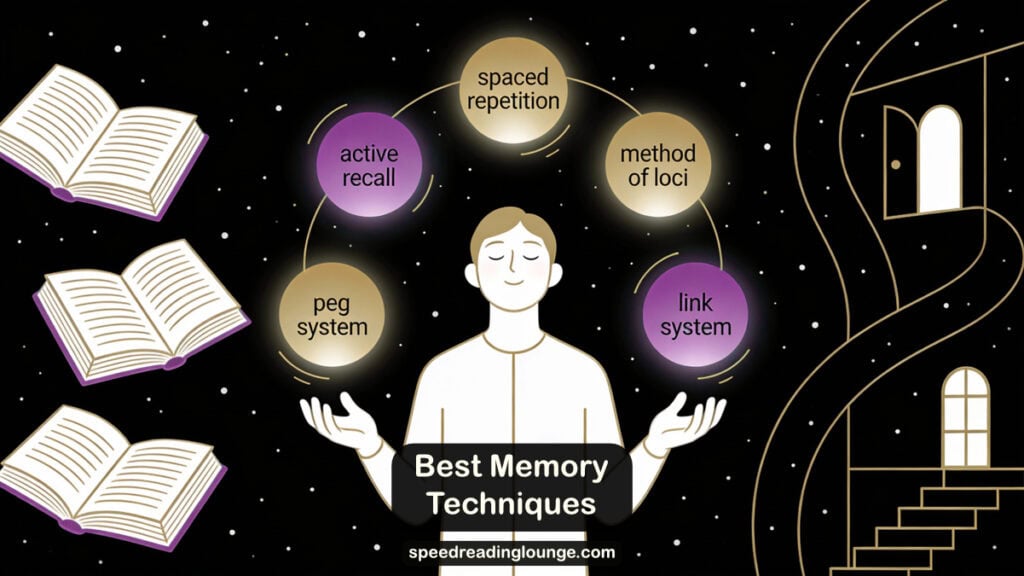
“Memory is the glue that binds our mental life together,” writes neuroscientist Eric Kandel. When I think about memory techniques, I do not picture dusty textbooks, training apps, or shiny AI dashboards. I picture small experiments you can run with your own mind, simple tests that show that this glue is becoming a little stronger.
The fun part is how quickly this can start to feel different, even in a world full of AI reading assistants. You read a page, close the book, and instead of the usual fog, you can still walk through the main ideas.
A name from a meeting actually shows up when you need it. A quote from a novel stays with you for weeks. Moments like that are not accidents. They grow out of how you treat new information when it first arrives.
Below, I will walk you through practical systems I use myself. Some are as simple as short recalling rituals. Others are classic tools like peg lists and memory palaces. These memory techniques are grounded in how the brain learns, yet playful enough to try during a lunch break.
You can read this article like a story. You will get the real value if you also treat it like a small lab for your own attention. Later, I will also show where modern AI tools can support, not replace, these skills.
How Memory Techniques Improve Learning and Retention
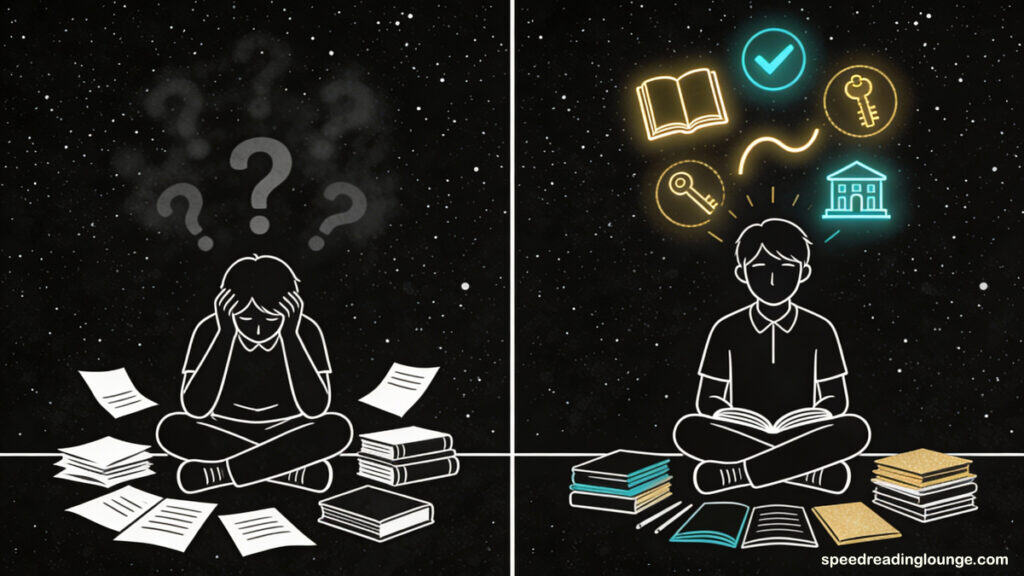
When you look at your notes from last week and feel as if a stranger wrote them, it is tempting to blame your memory. I used to do that as well. Over time, I noticed that my memory was not the real villain. The way I fed it was.
A simple way to think about memory is in three moves:
Encoding – New information enters your system.
Storage – It settles somewhere in your mental landscape.
Retrieval – It returns when you need it.
Psychologists call these encoding, storage, and retrieval. For everyday reading and learning, language matters less than the logic behind it.
Here is the part most people miss: if the first step is passive, everything that follows gets weaker. When I only skimmed lines with my eyes and hoped they would stick, I was encoding at the weakest possible level. The page looked familiar. Yet I could not tell the story of what I had just read. Nothing solid had formed that my mind could grab later.
Things shifted when I started treating new information as something I needed to use, not just admire. A paragraph stopped being a block of text and became a small scene I had to retell in my own words. A concept turned into a question I could answer without looking it up.
Those tiny shifts, small as they sound, gave my brain reasons to store what I was learning and improved my memory and retention.
And this is where memory techniques begin to matter. They give structure to that first contact with information. Some techniques turn ideas into images.
Others create simple hooks or locations where facts can live, which is especially useful when you want to remember what you read.
Even modern AI summarization tools, which can summarize and highlight for you, work best when they support this active work rather than replace it. The better you handle these early moments, the easier retrieval will feel later, whether you are sitting in an exam, presenting at work, or trying to recall a line from a book you loved.
1. Active Recall: The Power of Retrieval Practice
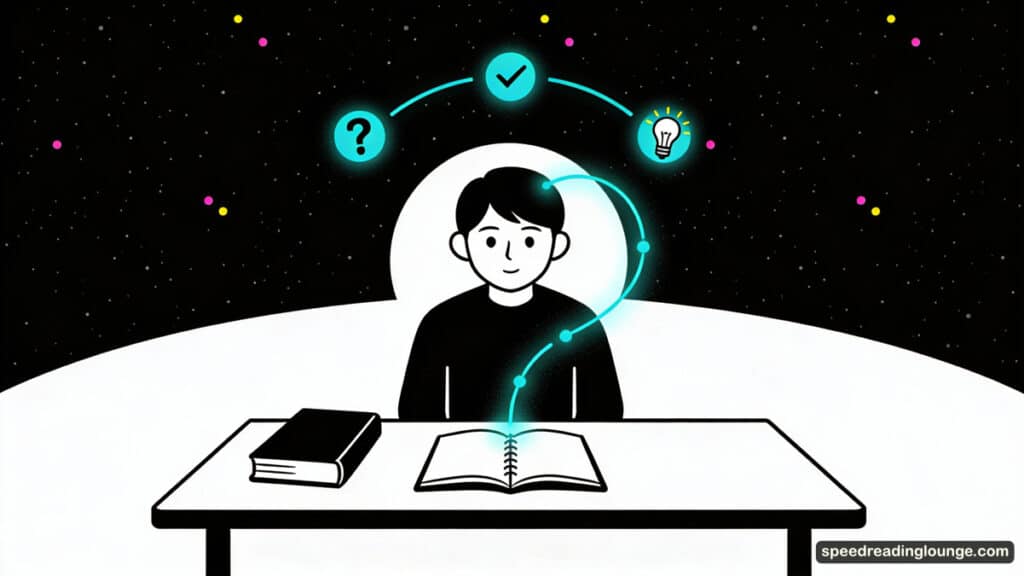
The recalling technique is simple. After you read, you close the book and try to remember what you just learned. This sounds almost too easy, yet it is one of the most powerful memory techniques for improving retention.
Here is why it works so well. When you force your brain to retrieve information without looking at the page, you are practicing what psychologists call retrieval practice.
Each time you recall something, you strengthen the neural pathway that holds it. You are not passively reading. You are actively testing yourself, which is exactly what sticks.
Most people do the opposite. They re-read the same passage, hoping it will sink in. Re-reading feels productive in the moment. Your eyes move across the words, and you feel a sense of familiarity. Yet familiarity is not the same as memory. The recalling technique cuts through that illusion entirely.
In the next step, spaced repetition will show you when to review what you have recalled, so it actually turns into long-term memory.
How to use the recalling memory technique
1. Start small.
After finishing a section or chapter, close the book. Ask yourself: What were the three main ideas? Can I explain the argument in my own words? Can I give an example? Write down what you remember without peeking.
At first, this will feel hard. Your mind may feel blank. That difficulty is a good sign. It means your brain is working to retrieve, not just recognize. This struggle is the opposite of what re-reading gives you, which is why it works so much better.
2. Try different formats.
Some people write summaries. Others talk out loud and record themselves. Some use the method with a friend, taking turns explaining what you each learned.
When you combine this with how to speed read, you can pause between sections and recall what you just covered. The format matters less than the act of pulling information from memory without the page in front of you.
3. Layer with skimming first.
Before diving into deep reading, preview the chapter using skimming and scanning techniques. This gives your brain a framework. Then, when you finish and recall, you have a structure to hang your memories on. Active recall works even better when you know what shape the information takes.
This is where you remember what you read actually happens. You are not memorizing words. You are reconstructing meaning. That reconstruction is what your brain stores for later use, whether you need it for an exam, a work project, or simply to recall a book you loved.
Pairing recalling with AI and modern tools
Modern AI summarizer apps and question generators can beautifully support this memory technique. After you finish a section, ask an AI tool such as Claude, ChatGPT, or Perplexity to generate quiz questions based on the text.
Then try to answer those questions without looking back. You get the benefit of retrieval practice plus a smart system that knows what matters most.
The key is this: the AI is not doing the remembering for you. You are using it to create better retrieval cues. Speed reading apps and other learning tools work the same way. They support your memory techniques and active recall; they do not replace them.
Try this prompt with ChatGPT: “Generate 5 quiz questions about [topic] that test comprehension, not just vocabulary.”
2. Spaced Repetition: Timing Your Memory Techniques for Better Results
You can use the best memory techniques in the world, yet if you review it only once, you will forget most of it within days. This is not a flaw in your brain. It is how memory works. Our minds naturally let information fade when we stop engaging with it.
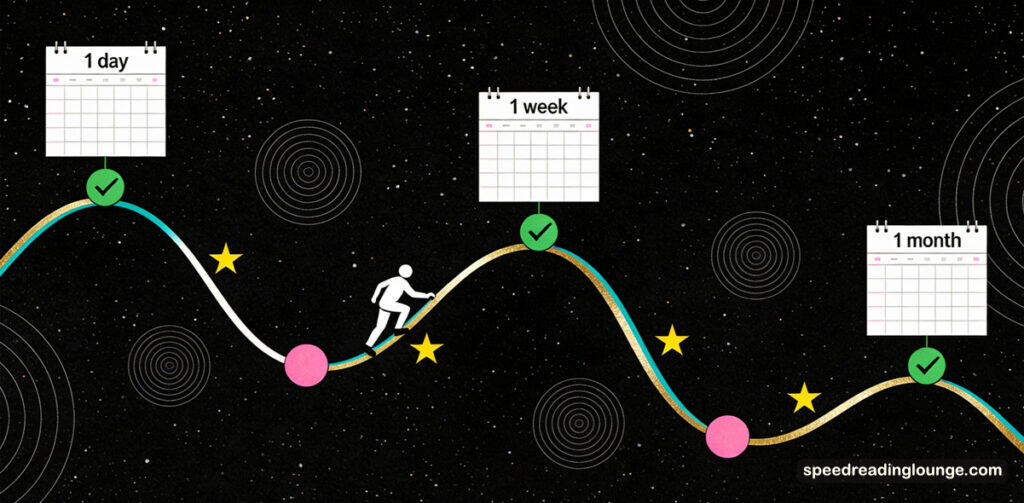
This is where spaced repetition comes in. Instead of reviewing something once or cramming all at once, you review at increasing intervals. The first review happens soon after learning. The next one stretches a bit longer. Then longer still. This pattern of spacing fights the natural forgetting curve that psychologists have mapped for over a century.
When you space out your reviews, each review becomes a small act of retrieval practice. You strengthen the memory trace more efficiently than if you massed all your study into one long session. The spacing itself does the heavy lifting.
A simple spaced repetition schedule:
Review after one day. Go back to your notes or the material you learned yesterday. Spend five to ten minutes recalling what you remember and checking what you forgot.
Review after one week. A week later, return to the same material. You will likely have forgotten more, but the act of retrieving it again strengthens the memory.
Review after one month. By now, the information has settled deeper. A final review at this point locks it into long-term memory.
This three-step schedule is simple enough to remember and strong enough to work. You do not need fancy apps, though they can help. A simple calendar with reminders, or even a notebook listing what to review on which dates, is enough.
The beauty of this approach is that it pairs perfectly with the recalling technique. Each time you review, you are not re-reading passively. You are testing yourself. You are retrieving without the page in front of you.
Combine spaced repetition with active recall, and you have one of the strongest memory techniques for building lasting retention.
AI and scheduling tools
If you want automation, modern speed reading apps and learning tools can track your reviews for you. You can also ask ChatGPT, Gemini, or Claude to create a personalized spaced-repetition schedule based on what you are learning.
The system handles the timing; you handle the retrieval practice. Many speed reading courses now integrate spaced repetition into their frameworks, demonstrating how memory techniques and reading speed work together.
Try this prompt:“Create a spaced repetition schedule for reviewing [material] over 30 days with specific dates.”
Once you understand timing, you can move on to lighter tools like acronyms, where the first-letter text method helps you fix sequences in place.
3. Acronym Method: Encoding Information with First Letters
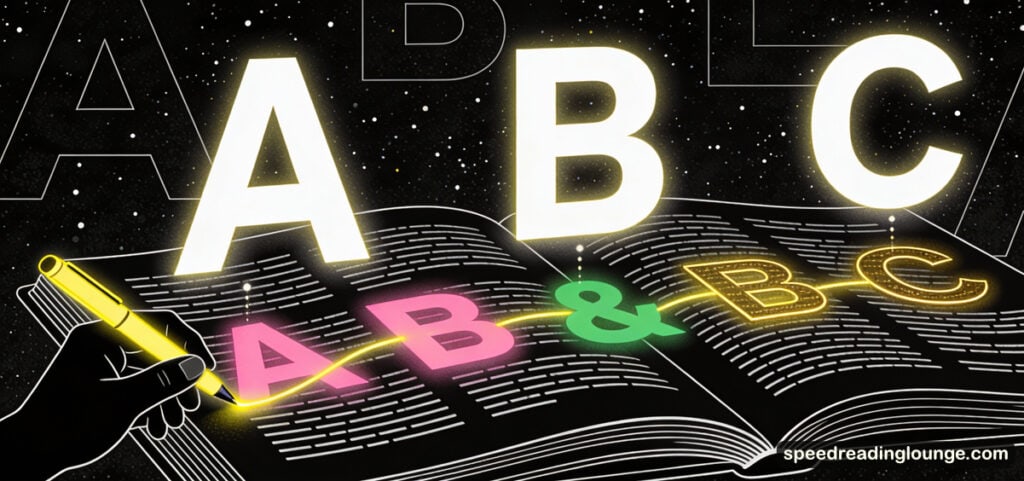
Sometimes you need to remember a list in order. A speech outline. A set of steps. A formula’s components. The first-letter text method does exactly this by turning the first letters of items into a memorable word or phrase.
Here is how it works. Take the items you need to remember. Extract the first letter from each. Rearrange or find a word that uses those letters. That word becomes your hook. When you need the list later, the word instantly recalls the sequence.
Example: You need to remember the planets in order from the sun:
Mercury, Venus, Earth, Mars, Jupiter, Saturn, Uranus, Neptune.
The first letters spell MVEMJSUN. Not a word.
So you create a phrase: “My Very Educated Mother Just Served Us Noodles.” That phrase sticks far better than the list itself.
How to use this memory technique:
Create your acronym.
Write down your list. Extract the first letters. Try to form a real word or memorable phrase.
When you cannot form a word naturally, make a silly phrase.
The weirder or more personal it is, the better it sticks. Absurdity is a memory technique in itself.
Use it for speeches and presentations.
Memorize your main points as an acronym. During your talk, the acronym guides you through each section without notes. This pairs well with how to speed read—you can preview your structure, then deliver with confidence.
This is one of the best memory techniques, practical for exams, presentations, and professional contexts where you need to recall sequences reliably.
It is less useful for deeply understanding concepts, so pair it with the recalling technique to ensure you grasp the material, not just the order.
Using AI to generate acronyms:
Try this AI prompt:“Turn this list into a memorable acronym or funny phrase I can easily recall: [paste your list].“
An AI tool like ChatGPT or Perplexity can generate multiple options quickly, letting you choose the one that resonates most. You still do the remembering; the AI just saves time on the creative part.
When lists grow longer or more structured, the peg system gives you an even stronger set of hooks to hang them on.
4. Peg System: Creating Mental Hooks for Lists and Numbers
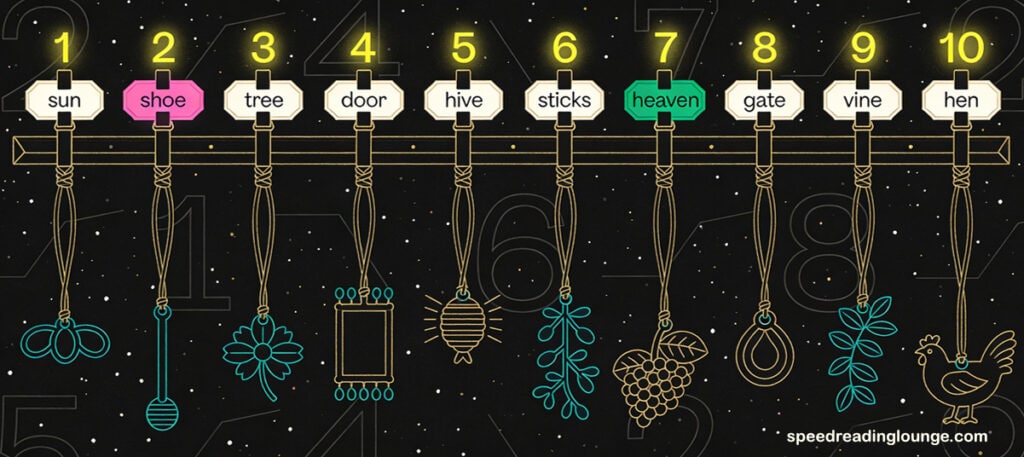
The peg system is a classic memory technique that pairs items you want to remember with a mental image. You create a list of “pegs”—mental hooks—then attach new information to each peg through vivid association.
Here is how it works.
Start with a simple peg list. The most common is the number-rhyme system:
1 = Sun, 2 = Shoe, 3 = Tree, 4 = Door, 5 = Hive, 6 = Sticks, 7 = Heaven, 8 = Gate, 9 = Wine, 10 = Hen
Now you need to remember a shopping list:
milk, bread, eggs, butter, and cheese.
Take the first item (milk) and create a bizarre image linking it to the first peg (sun). Picture milk pouring down from the sun. Make it vivid, strange, even gross. The more absurd, the better it sticks.
Repeat for each item. Bread stuck to a shoe. Eggs falling from a tree. Butter melting on a door. Cheese crawling inside a beehive.
When you need to recall your list, you simply walk through your pegs, and the images appear instantly. This memory technique works because your brain remembers unusual, exaggerated images far better than plain facts.
Using AI with the peg system:
Try this AI prompt: “I have this peg list: [paste your pegs]. Help me create vivid, bizarre, memorable images linking these items: [paste your items].”
AI can brainstorm wild associations faster than you can alone, giving you more creative combinations to choose from. You still build the mental links; the AI just accelerates the creative process.
For shorter, everyday chains, the link system builds on the same idea but keeps the structure even lighter.
5. Link System: Chaining Ideas Together for Better Recall
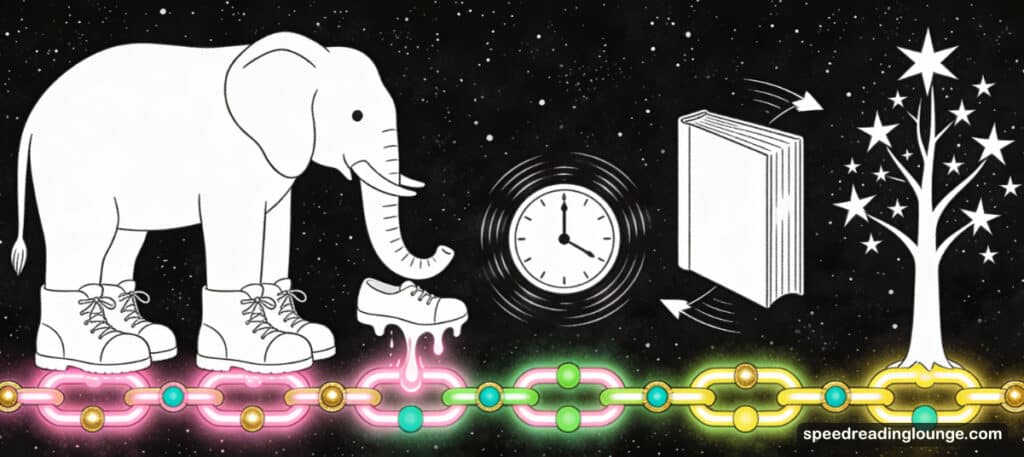
The link system is simpler than the peg system memory technique. Instead of using fixed pegs, you create a chain of vivid associations connecting one item directly to the next. Each image links to the next, forming a narrative thread you can follow.
Here is how it works. Say you need to remember:
coffee, passport, meeting, umbrella.
Create bizarre images linking each to the next. Coffee pouring into a passport. A passport flying into a meeting room. The meeting dissolves under an umbrella. One wild image after another, forming a story.
When you recall, you start with the first item and follow the chain. Each image triggers the next. The narrative flow makes retrieval natural and quick.
The link system technique works best for shorter lists—up to ten items. Beyond that, the chain becomes too long and breaks. For longer lists, the peg system or memory palace technique works better.
When to use it: Errands, sequences, arguments in a speech. Anywhere you need items in order without gaps.
Using AI to build association chains:
Try this prompt with Perplexity or ChatGPT: “Create five bizarre, vivid image associations linking these items in sequence: [paste your list]. Make the images surreal and memorable.”
An AI can generate wild, creative chains in seconds. Pick the one that resonates, then embed those images in your mind. You do the remembering; the AI accelerates the creative brainstorm.
Of course, the state you are in when you build these images also shapes how well they stick, which is where mood and context come in.
6. State-Dependent Learning: How Mood Affects Memory

Where you study matters. How you feel matters. These are not minor details. They shape whether information sticks or slips away.
This is what psychologists call state-dependent memory. When you learn something in a particular mood or environment, you retrieve it best in a similar state.
Study for an exam in silence, then take the exam in a noisy room, and recall becomes harder. Your brain encoded the information linked to quiet.
The good news: you can use this to your advantage. If you know your exam will happen in a specific room, study there if possible.
If you will be nervous during a presentation, practice while feeling slightly anxious. Match the learning state to the retrieval state.
You can also flip this around. Learn the same material in different moods and environments. Study once at your desk, once at a café, once before exercise.
This variation forces your brain to encode the information in multiple contexts. When retrieval time comes, the information feels accessible regardless of your state.
Practical applications:
- Study important material when alert and focused, not when tired.
- If you must memorize under pressure, practice under mild pressure.
- Review material in the location where you will need to recall it.
These memory techniques work best when combined. Pair state-dependent learning with active recall and spaced repetition for deeper, more durable retention.
With state and context on your side, you are ready to use one of the most powerful memory techniques of all—the memory palace.
7. Memory Palace: Using the Method of Loci
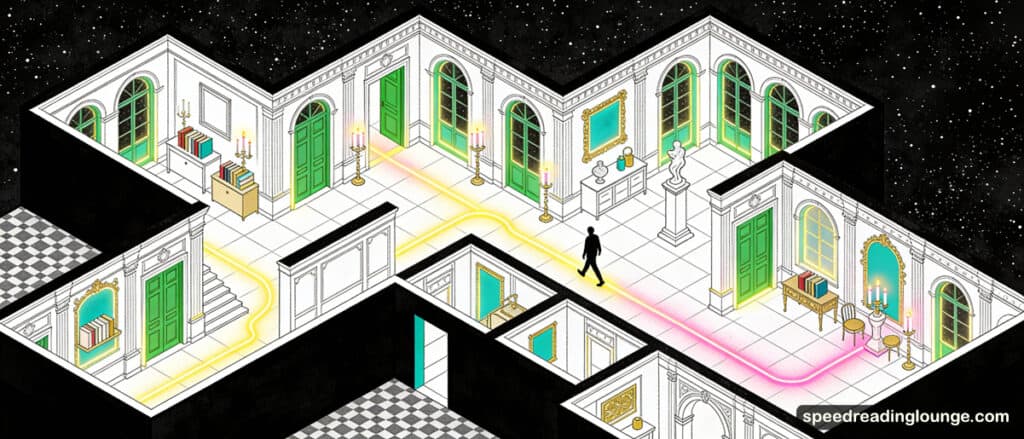
The memory palace, or method of loci, is one of the oldest memory techniques still in use. Ancient Greek and Roman orators used it to memorize entire speeches without notes. The logic is elegant: pair information you want to remember with physical locations in a space you know well.
Here is how this technique works.
Choose a familiar place. Your home. Your commute. A building you know. Mentally walk through it room by room, location by location. At each stop, place an item or concept you need to remember. Use vivid, bizarre images to make the association stick.
Say you need to remember key points for a presentation.
- Your intro lives in your front door.
- Your first point appears as a wild image in your living room.
- Your second point transforms your kitchen.
- Your conclusion waits in your bedroom.
When you need to recall, you mentally walk the route and collect each image.
The memory palace works for complex, lengthy information—more than the peg or link systems can handle. Presentations, essays, speeches, and detailed arguments. It scales beautifully because it mirrors how your brain naturally organizes spatial information.
Getting started:
Pick a familiar location. Mentally map it into 5–10 distinct stops. Start simple: one point per location. As you practice, this memorization technique becomes second nature.
For guidance on building your first palace, see our full memory palace guide.
You now have a toolkit of core memory techniques. The next step is learning how to apply them where they matter most: reading, studying, and professional performance.
Memory Techniques for Reading and Comprehension
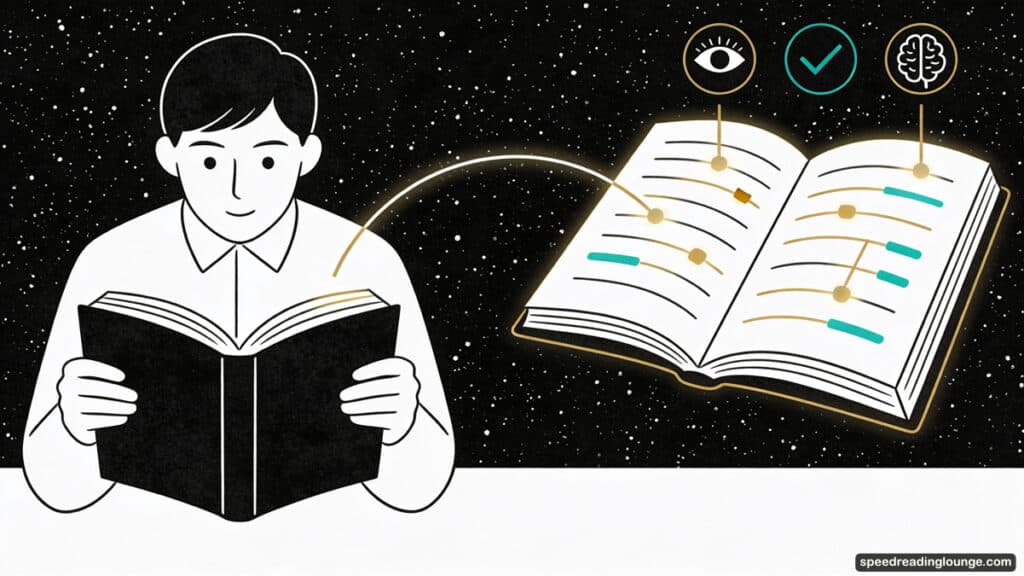
Now that you understand the core systems, the real power emerges when you apply them while reading. Most people read passively, hoping retention will happen on its own. It will not. The memory techniques you have learned turn reading into active, strategic learning.
Start with this simple workflow. Before you read, preview the chapter using skimming and scanning. Identify the main ideas and structure. This primes your brain for encoding.
As you read, use the principles of how to speed read: focus on key sentences, chunk information, and avoid subvocalization drift. Read faster, but with purpose.
After you finish a section, close the book and use the recalling technique. What were the three main points? Explain them in your own words. This retrieval practice is where memory forms.
Then schedule reviews using spaced repetition. One day later. One week later. One month later. Each review strengthens retention.
AI-powered reading workflow:
Modern AI speed reading guides show how to pair AI tools with these fundamentals. Use an AI summarizer app to extract key ideas after reading. Then test yourself on those ideas without looking back.
Try this prompt with Claude or Perplexity: “Summarize the main arguments from [text]. Then create 5 questions that test understanding, not just recall.”
The AI structures information; you encode and retrieve it. This hybrid approach combines speed with retention. You improve memory and retention by treating reading as an active, layered process rather than a passive encounter with words.
Memorization Techniques for Studying and Exams
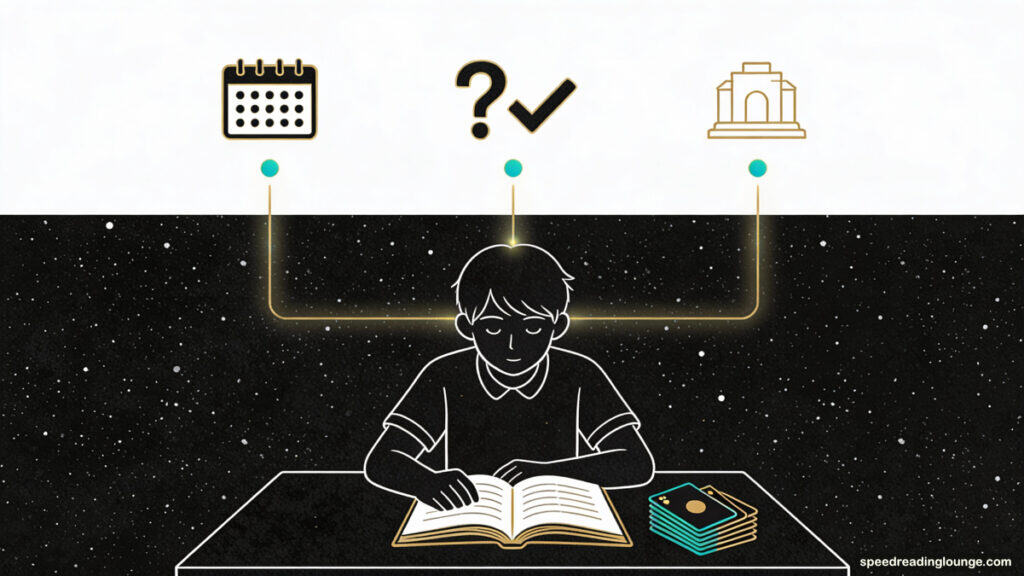
Exams are the ultimate test of memory techniques. Usually, you cannot bring your notes. You cannot look things up. You must retrieve from memory under pressure. This is where everything you have learned converges.
Start by understanding what you will be tested on. Is it definitions? Facts in sequence? Conceptual understanding? Different exam types require different memorization techniques.
For definitions and vocabulary, use the peg system or link system. Create bizarre associations between the word and its meaning. Review using spaced repetition: one day after learning, one week later, one month before the exam.
For essays and conceptual questions, use the memory palace. Build a mental structure for each major concept. Place supporting ideas at each location. Practice walking through your palace multiple times, retrieving the structure under timed pressure.
For problem-solving and application questions, use the recalling technique religiously. After studying a section, close your notes and solve practice problems without looking back. Each problem solved from memory is retrieval practice.
Your weekly study plan:
Monday–Wednesday: Learn new material. Use active recall immediately after. Create memory systems (peg lists, palaces, acronyms) for key information.
Thursday–Friday: Review using spaced repetition. Test yourself without notes.
Weekend: Light review. Practice retrieving under exam-like conditions (timed, no notes, quiet environment). This matches your retrieval state to exam conditions.
One week before exam: Final reviews at increasing intervals. Focus on weak areas.
Using AI as a study partner:
Try this prompt with ChatGPT or Claude: “Create a practice exam with 10 questions based on [topic]. Include questions testing recall, understanding, and application.”
Then answer without looking at your notes. Grade yourself. Ask the AI to explain wrong answers. Memorization techniques for exams work best when you test yourself repeatedly, and AI can generate unlimited practice material.
Memory Techniques for Professional Performance

Memory matters at work just as much as in school. You need to remember names after meetings. Track projects and deadlines. Recall details from conversations. Retain presentations you have given or attended.
Use simple association techniques for names. Link a person’s face to a distinctive feature and a memorable phrase. The CEO with the red tie becomes “Red Tie Leader” in your mental palace. This may seem trivial, but it changes how colleagues perceive you.
For meetings and projects, create a mini memory palace in your office. Each project lives at a different location on your desk or wall. Walk through it mentally to track what is active, pending, and complete.
For presentations you deliver, use the memory palace with your main points stationed at familiar locations. This frees you from notes and lets you speak with confidence.
The same memory techniques work here. Active recall. Spaced review. Visual association. Applying them to work transforms how you perform and how others see your competence and professionalism.
Using AI for professional memory:
Try this prompt with Perplexity: “Summarize the key action items and decisions from this meeting: [paste notes]. Organize them by priority and deadline.”
Use the AI summary as your retrieval cue. Then mentally place each item in your office memory palace. The AI organizes; you remember.
All of this becomes much easier when your daily habits and environment support your brain, which is what we will look at next.
8 Lifestyle Factors That Support Memory Improvement
Memory techniques work best when your brain is operating at its best. This means the fundamentals matter: sleep, focus, stress, and movement.
Sleep. Your brain consolidates memories during sleep. Six hours is minimum; seven to nine is ideal. Skip sleep and your memory suffers immediately, no matter which memory technique you use.
Focus. Eliminate distractions when encoding new information. Phone away. Notifications off. Single-task, not multitask. Your brain encodes information more effectively when attention is undivided.
Visualize when reading. Use visualization techniques to create mental images as you read a text. It will help to tie words to specific images, which will immensely improve your memory.
Balance old and new information. Build up new information on previously learned content. If you learn something new, set aside time to read and explore the new subject. Get down to learning and memorizing after accomplishing this pre-learning task.
Movement. Exercise supports hippocampal function and memory formation. A walk before studying, or light movement during breaks, improves retention.
Stress management. Chronic stress degrades memory. Simple practices help: breathing exercises, short walks, time outdoors. Even five minutes reduces cognitive load.
Organize your space. A cluttered desk or chaotic digital folder taxes working memory. Keep your learning environment clean and organized, so your brain can focus on encoding, not searching.
Teach what you learn. The best way to solidify memory is to explain it to someone else. Teaching forces you to reconstruct and articulate ideas, strengthening retrieval and improving memory and retention across all domains.
These habits are not exotic. They are foundational. Combined with the memory techniques you have learned, they create the conditions for lasting retention.
Integrating Memory Techniques into Daily Practice

You began this article wondering why reading felt so quickly forgotten. Why names slipped away. Why studying felt like pushing water uphill. Now you understand why. Your brain was not the problem. The way you fed it was.
Memory techniques are not magic.
- They are simply ways of honoring how your brain actually works.
- They give structure to encoding.
- They build retrieval practice into your routine.
- They pair learning with the right environment and state of mind.
You have a toolkit now. The recalling technique. Spaced repetition. Peg systems, link systems, acronyms, memory palaces. Each one serves a different purpose. Choose the memorization technique that fits what you need to remember.
Start small. Pick one technique. Try it for one week. Notice what changes. You will be surprised how quickly your retention improves when you stop hoping memory will happen and start building it deliberately.
The real power comes from layering these memorization techniques together. Preview with skimming and scanning. Read with focus, using the principles of speed reading. Recall without notes. Review at intervals. Create vivid images. Match your study state to your retrieval state.
Add modern tools where they genuinely help. AI summarizer apps can extract key ideas. Speed reading apps can track spaced reviews. The AI speed reading guide shows how to layer these tools with memory fundamentals.
This is how you remember what you read. How do you ace exams? How do you build a reputation at work for competence and reliability? Memory is not fixed. It is a skill you can train, and the memory techniques in this guide are your training tools.
Start today. Pick one small thing to remember using one technique. Build from there.
6 Memory Techniques to Improve Learning
- Recalling Technique – Ask many W-questions, i.e., Why is it important? Use AI to generate quiz questions that test your recall without letting you peek at the text.
- Spaced Repetition – Review at increasing intervals: one day, one week, one month. Specialized apps can automate the scheduling while you handle the retrieval.
- First-Letter Text Method – Write the first letter of every word in the text. Ask an AI to turn your list into memorable acronyms or silly phrases.
- The Peg System – A ‘peg’ is a mental hook on which you hang new information. Use AI to brainstorm vivid, bizarre images linking your items to your pegs.
- The Link System – Mentally link things you want to remember together. Create a story chain, the weirder the better. Pair with how to speed read for smoother recall.
- Theory of Mood – Recall how you felt in a certain situation to memorize things. Study in the same environment or state where you will need to retrieve the information.
- Memory Palace – Create a mental place to store information. Use familiar locations for presentations, essays, and complex material. Reference the full memory palace guide for detailed building steps.
FAQs Memory Techniques
1. What is the best memory technique for studying and retention?
For most people, the best “all‑rounder” is combining active recall (testing yourself from memory) with spaced repetition (reviewing at increasing intervals). This pairing consistently beats rereading or highlighting for long‑term retention in lab and classroom studies.
2. How often should I review with spaced repetition for long‑term memory?
A simple starting schedule is to review after 1 day, 3–7 days, and then every 2–4 weeks, stretching the gap each time. The exact spacing is less important than consistently reviewing just before you would forget and adjusting intervals based on difficulty.
3. How do I actually use active recall instead of just rereading my notes?
Turn your material into questions or prompts (flashcards, practice tests, or a blank page) and try to answer from memory before you look at the text. Then immediately check, correct your mistakes, and re-test yourself later using spaced repetition rather than re-reading passively.
4. When is a memory palace (method of loci) worth using?
Use a memory palace for dense, ordered, or abstract material—like speeches, long lists, vocab, or exam outlines—where location-based images help you keep structure. For short facts or single definitions, simpler mnemonics or straight active recall are usually faster to set up.
5. How long does it take for memory techniques to improve learning and recall?
With regular practice (a few focused sessions per week), many learners notice small gains within 1–3 months and more substantial, reliable recall improvements after 6–12 months. The key is consistency: using memory techniques in your real study tasks, not just reading about them.
Sources & Further Reading
- The Method of Loci in Psychological Research – Ondřej, J. (2025). PubMed Central
- Optimized Virtual Reality-Based Method of Loci Memorization Techniques – Moll, B., & Sykes, E. (2022). PMC/NCBI
- Retrieval Practice and Learning Science Research – Agarwal, P. K., et al. Retrieval Practice Organization
- Improving Students’ Learning With Effective Learning Techniques – Dunlosky, J., et al. (2013). Psychological Science
- Memory: A Contribution to Experimental Psychology – Ebbinghaus, H. (1885). Internet Archive
- The Effect of Testing Versus Restudy on Retention – Rowland, C. A. (2014). APA PsycInfo
- In Search of Memory: The Neuroscientist Eric Kandel – Icarus Films (2009). Documentary Film
- The Peg System for Remembering Lists – Memory-Improvement-Tips.com. Free Guide
- How to Improve Your Memory While Studying – Mohs, R. C., Ph.D. HowStuffWorks
- The Link or Chain System – The Memory Institute. Technique Guide
- 20 Study Hacks to Improve Your Memory – GoConqr. Study Tips
- Memory Techniques, Memorization Tips – Academic Tips. Resource Hub