
ReadMe! App Review
ReadMe! app – An eBook reader for iOS and Android
There’s an interesting tension in how we approach reading today, and I feel it in my own habits. Some speed reading apps push us to move our eyes faster, to consume words with ever-greater efficiency.
Others take a quieter stance, like text-to-speech apps, asking whether our eyes need to be part of the act of reading at all.
ReadMe! lands firmly in the second camp — and it makes that case more convincingly than most of its competitors. Normally, an individual can read from 200 to 400 words per minute. The ReadMe! app may help you to achieve 1,000-1,700 wpm.
But don’t be fooled. That’s not an obvious win. Text-to-speech has a long history of sounding robotic, feeling passive, and producing apps that work beautifully in demos and frustratingly in real use. ReadMe! has been working against that reputation since 2015, and in 2026, it’s genuinely worth asking whether it’s succeeded.
By the end of this review, you’ll know exactly what ReadMe! does well, where it runs into walls, how it compares to Speechify and Voice Dream Reader, and whether it deserves space on your phone.
What Is ReadMe! app? Features and Highlights
ReadMe! by Inkstone Software is a text-to-speech reading app available on iOS and Android. Its core function is simple: it reads text aloud from web articles, PDFs, documents, RSS feeds, and the clipboard.
The app is built for people in motion — commuters, multitaskers, and anyone who wants to engage with long-form reading without having to stop and sit with a screen.
It definitely belongs to the mainstream of text-to-speech tools, not confined to just research labs or accessibility use. But more reaching toward a broader idea of listening as reading.
ReadMe! feels like an everyday companion for those who want to make their listening time more meaningful. In that sense, it stands alongside tools like Speechify and Voice Dream Reader, inviting comparison but also carving out its own quiet space.
Readme! Features and Highlights
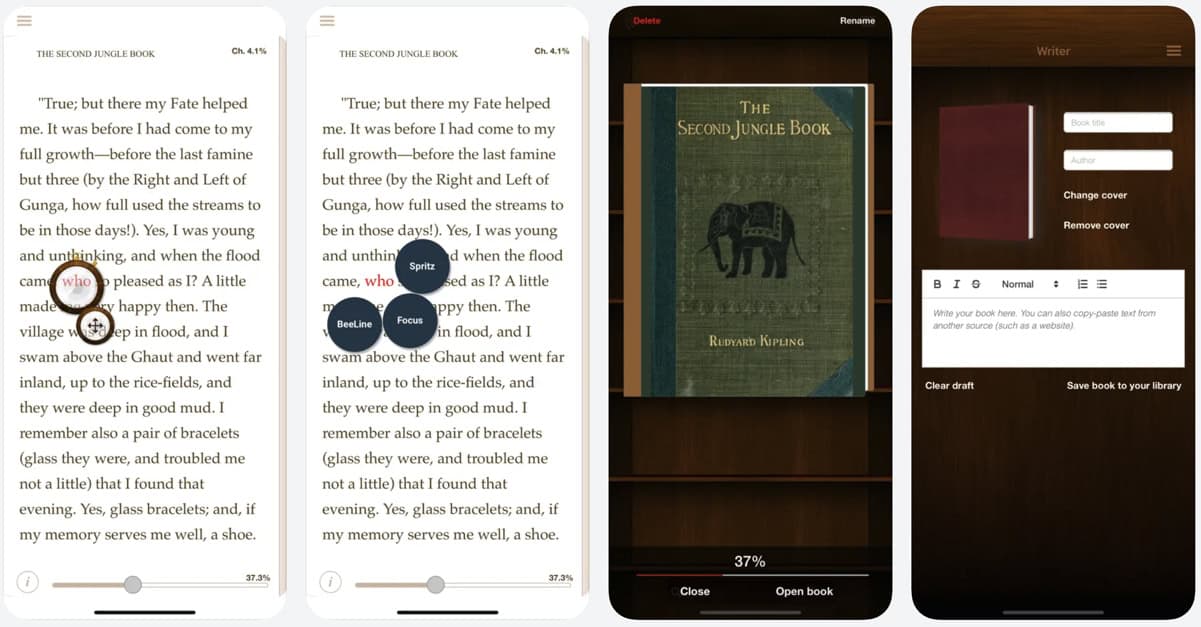
BeeLine Reader
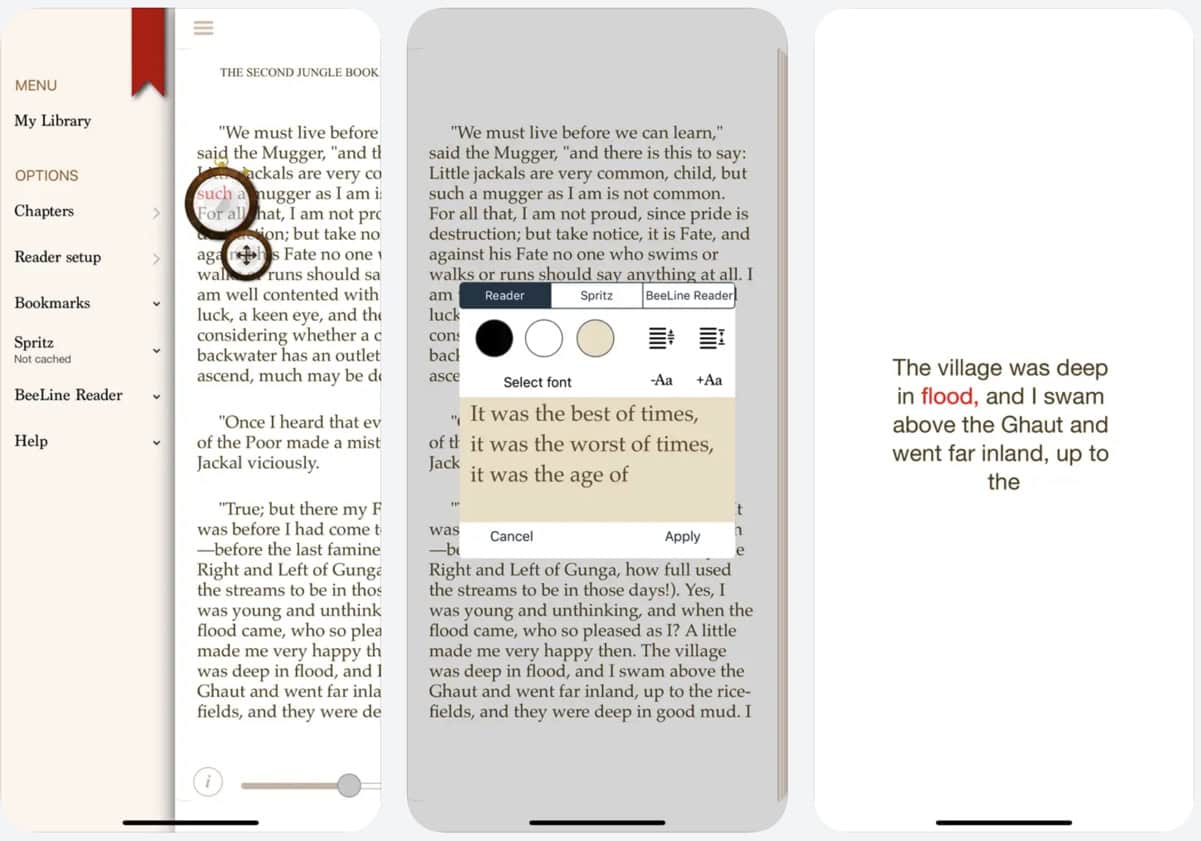
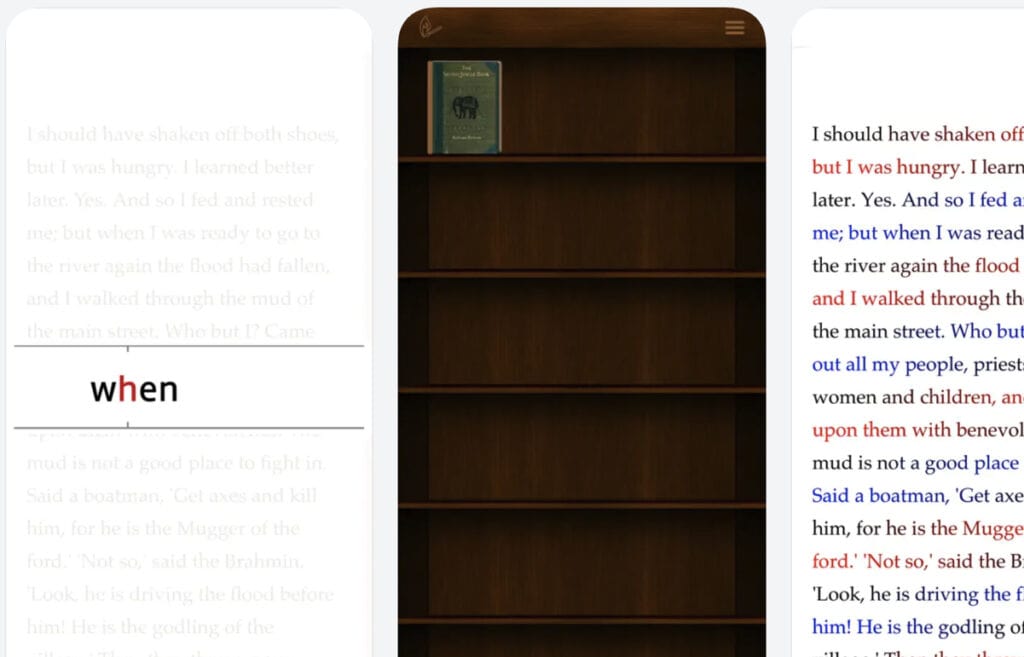
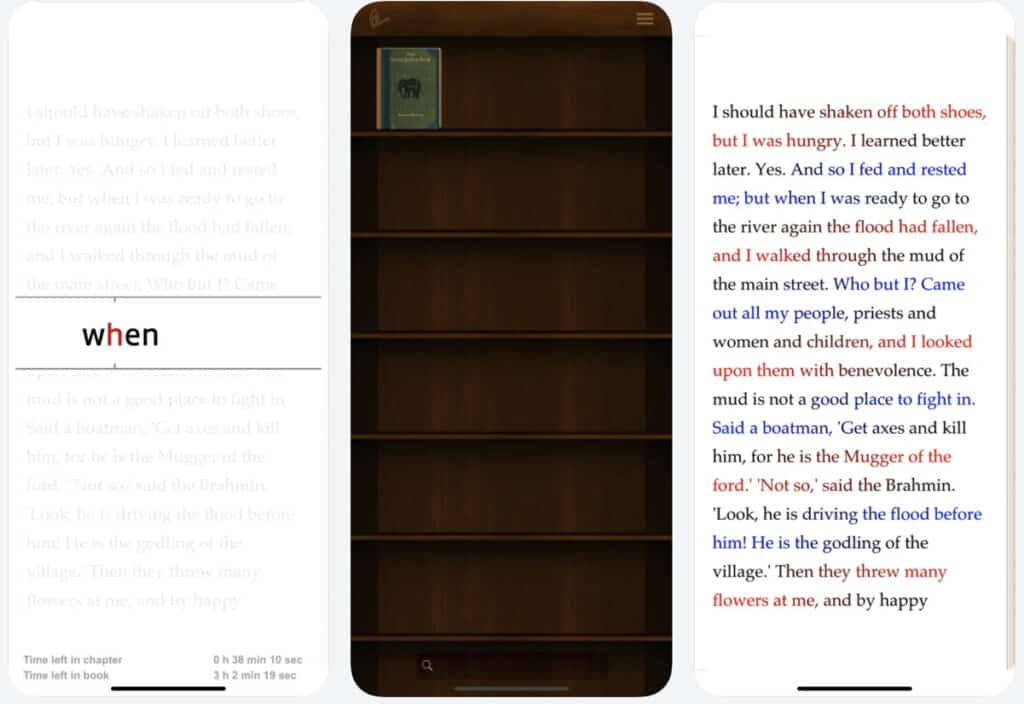
Awarded by Stanford University, this is one of the highlights of the ReadMe! app. The aim is to help increase efficiency, fluency, and pace for all readers, including those experiencing learning difficulties such as dyslexia. Users can test it for free.
Spritz Technology
The ReadMe! app comes with built-in Spritz technology, a streaming technology that reduces eye movement and enables effective evaluation of digital content. It is an entertaining way to increase your skills and help readers deliver a more focused user experience. ReadMe! also provides support and assistance to readers much faster, with minimal effort, on any device of your choice.
Optical Recognition Point (ORP)
The ORP is what makes Spritz actually effective. Rather than re-fixating on every single word, phrase, or beginning of a sentence, your eyes remain focused mainly on identifying the ORP to understand or comprehend words. This will finally allow you to increase the pace, and about 80% of the time is spent localizing the ORP.
Control over Reading Pace
ReadMe! helps increase pace without any sort of training. You will also have the option to slow down to grasp more, or just sit back and enjoy your favorite book if that’s the way you prefer it. Some people face a lot of difficulty concentrating, and for individuals with certain disabilities like dyslexia or AMD, it is a noteworthy solution.
Improve Comprehension
I have to admit it, it may take some effort to sit down and give your 100% attention to a new book. The ReadMe! app aims to make that easier, particularly when going through lengthy e-books, with the added advantage of improving comprehension. For someone who faces difficulty with high paces, he or she can simply turn down speed, reduce the number of words to display, and thus focus better.
Synchronize Option
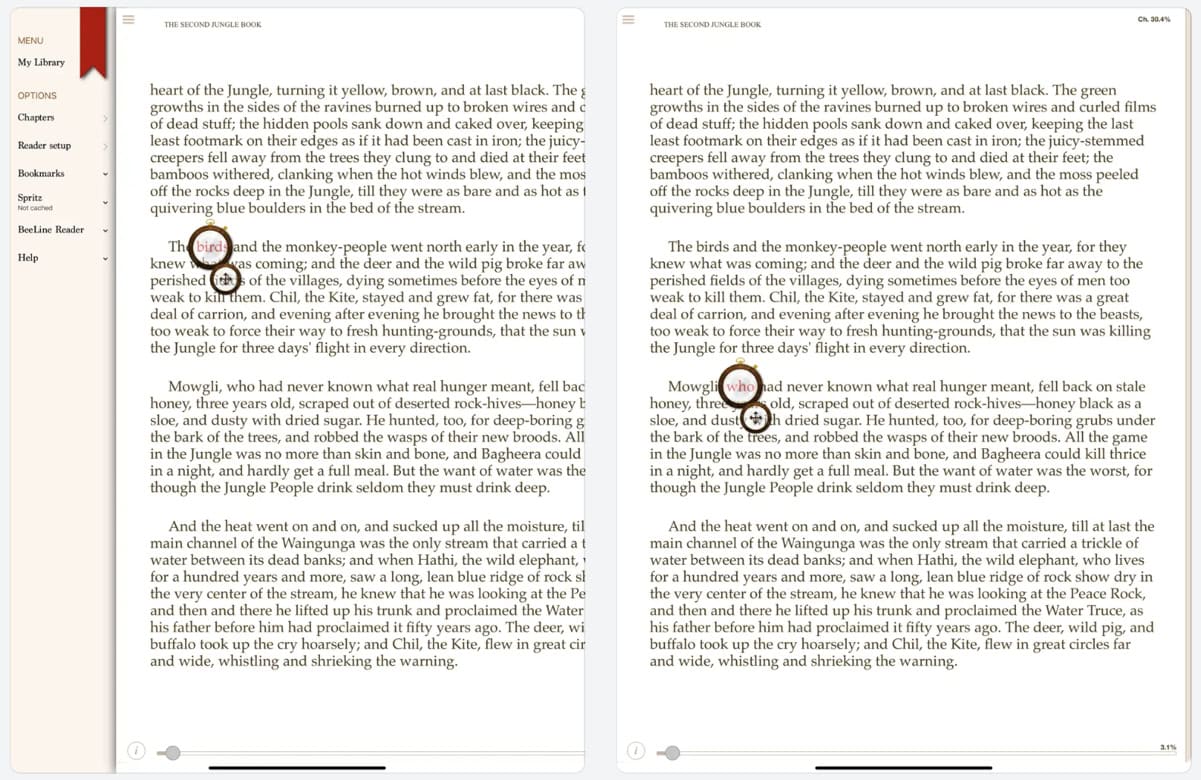
A great feature is that you can easily synchronize your e-books across your iOS and Android devices. ReadMe! gives you the option to enable synchronization, and with this option, all your bookmarks, recent web pages, and notes can be synced across your devices where you run ReadMe! app. Synchronization is tremendously fast as well.
Amazing E-Pub Reader
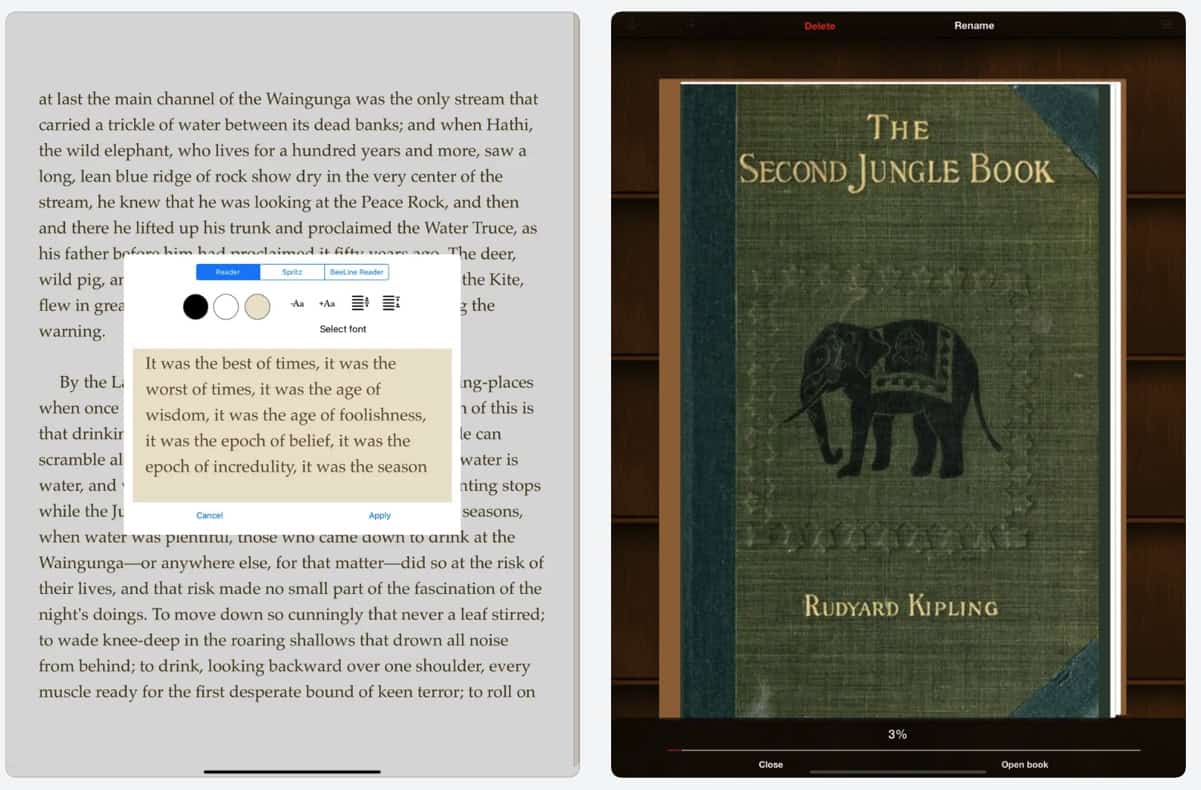
This is an e-Pub Reader with full support for rich and high-quality images. The biggest advantage of ReadMe! is that it does not degrade the quality of the converted PDFs. Supported formats include ePub, PDF, Word, and plain text.
Data Usage
One thing to be kept in mind is that Spritz requires an Internet connection, but while using ReadMe! you can cache your eBooks and make them easily available for offline use. This can reduce your data usage.
Who Actually Gets the Most from the ReadMe! App
Commuters and people with genuinely packed schedules get the clearest return here. If your morning is spent on a train or behind a wheel, ReadMe! turns your unread article backlog into something you can actually finish. The RSS integration and Article Sync features are designed precisely for that kind of workflow.
Secondarily, it works for people with reading fatigue or mild visual processing difficulties who find extended screen reading tiring. The listening experience is smooth enough to sustain long sessions.
Students hoping for a deep academic reading tool, however, will find it limited. It certainly handles PDFs very well. But complex formatting — footnotes, multi-column layouts, technical diagrams — unfortunately don’t translate cleanly into audio.
And anyone looking for AI-powered summarization or comprehension tools will leave disappointed. ReadMe! reads to you, but it doesn’t analyze for you.
Reading tip: If you want AI to actually save reading time, start with a focused overview instead of scattered tips. The main AI speed reading guide walks you through my 3‑Step AI Speed Reading Method and shows where tools, AI summaries, and listening apps realistically help.
From there, you can dive into tutorials on AI‑supported reading workflows such as our ChatGPT for speed reading guide — and compare carefully selected AI speed reading apps and text-to-speech apps or AI summarization tools before committing to any subscription.
What ReadMe! Does — And Whether It Actually Works
Web reading and feeds
ReadMe!’s greatest strength, in my experience, is how cleanly it reads web content. Its web article import removes navigation, ads, and visual clutter. What remains is the text I actually want to hear.
For long-form journalism or newsletter pieces, this works surprisingly well. The parsing is not perfect. Sometimes a headline or small metadata fragment slips through. Still, it feels consistent enough that I trust it for daily listening.
The RSS and feed reader integration also gives ReadMe! an edge over simpler text‑to‑speech apps. I can subscribe to publications directly, and new articles appear automatically. As someone who abandoned traditional RSS readers because I couldn’t keep up with the backlog, this feature makes listening feel manageable again.
Listening experience and controls
The voice quality is what most users use to decide whether the app feels right. ReadMe! includes a wide selection of voices, among them premium neural options. These sound far more natural than older synthesized ones.
At moderate speeds, between 250 and 350 words per minute, the better voices are genuinely pleasant. However, increasing the pace makes the naturalness fade a little, though never entirely.
Many users coming from older text-to-speech apps notice the improvement immediately. The quality now rivals Voice Dream Reader and comes close to Speechify’s top-tier voices, though it doesn’t quite match their polish.
Speed control is precise and responsive. You can adjust playback speed seamlessly, without stutters or losing your place. For people gradually training themselves to listen faster, that smooth control matters more than maximum speed.
The RSS and feed reader integration gives ReadMe! an edge over simpler text‑to‑speech apps. You can subscribe to publications directly, and new articles appear automatically. For anyone who left traditional RSS readers behind because of unread piles, this feature makes listening manageable again.
Documents, limits, and missing AI
PDF support exists, but it feels inconsistent. Clean, text‑based files perform well. Scanned documents, academic layouts, or visually dense PDFs often create jumbled or missing passages. This limitation isn’t specific to ReadMe!. It reflects a broader industry challenge, and it’s worth noting for users focused on document reading.
Playlist and queue controls make longer sessions more intuitive. You can line up articles or chapters and listen in sequence. A sleep timer adds quiet convenience for evening routines. Background playback works as expected and keeps the reading flow steady while you multitask.
Where ReadMe! lags behind is in AI integration. There’s no summarization, comprehension check, or highlight generation. It reads, and that’s all. As newer tools like Speechify and Notta weave AI summaries and analysis into their systems, ReadMe! risks feeling still while the rest of the category moves forward.
Reading tip: Tools and apps are useful, but most lasting gains come from a few solid tutorials you revisit. If you suspect habits, not software, are holding you back, do this. Start with a fundamentals guide on how to speed read, then move into practical lessons on skimming and scanning, and reading word chunks.
Once that base is in place, exploring a structured speed reading class makes more sense — you get a clear path, practice material, and gentle accountability instead of yet another one‑off article.
Where ReadMe Gets It Right
Voice quality
At standard listening speeds, I find the voice quality genuinely competitive. For an app that is not Speechify and does not charge Speechify prices, that feels like a real achievement. Whenever I switch over from default iOS voices or older tools like Instapaper’s audio, the difference is obvious.
Content pipeline
In day-to-day use, the content pipeline feels reassuringly smooth. Web clipping, RSS feeds, clipboard import, and cloud document syncing all work without the fiddly troubleshooting I’ve had to deal with in other apps.
When my workflow is “find something worth reading, send it to the app, listen,” that level of reliability across each step matters more than any single headline feature.
Interface and performance
I also appreciate how clean and unhurried the interface feels. Navigation is straightforward enough that I would be comfortable recommending it to less tech-savvy readers.
For an app that has been around for nearly a decade, it never strikes me as dated or abandoned. The iOS version, in particular, feels in step with current design conventions. Battery use is another quiet win: long listening sessions do not drain my phone as quickly as some heavier apps, which I notice on commutes and travel days.
In practice, ReadMe! gets several things right:
- Voice quality that feels like a clear step up from default system options.
- A stable content pipeline that keeps “send and listen” mostly frictionless.
- An uncluttered interface and efficient performance suited to long listening sessions.
The Honest Problems Worth Knowing
PDF handling limits: PDF handling is the most consistent complaint I see in recent app store reviews. It deserves more than a small footnote. If PDFs are central to what you read — research papers, reports, or fixed-layout e-books — ReadMe! will frustrate you often enough that it becomes a real limitation.
Android lagging behind: On Android, the app clearly trails iOS in stability and polish. Recent reviews mention more crashes, slower sync, and less consistent voice performance, which matches my experience. If you are mainly on Android, Voice Dream Reader or Speechify’s Android app is currently a safer choice.
Missing AI features: The absence of AI features is no longer a minor omission. It is becoming a competitive liability. The reading app space is reorganizing around AI summaries, comprehension tools, and intelligent highlights. ReadMe! remains a clean, capable TTS app that has not moved in that direction, which may or may not matter to you.
Pricing constraints: Pricing for premium content feels reasonable to me. However, the free tier is too narrow for most people to avoid the paywall. The voice quality that makes ReadMe! appealing lives behind a subscription.
In practice, the main issues are:
- Weak and unreliable PDF handling for serious document use.
- A noticeably weaker Android experience than on iOS.
- No AI summaries or comprehension tools while rivals move in that direction.
- A free tier that limits access to the best voices.
ReadMe! Pricing Options
Free tier: ReadMe! offers a free tier with basic voices and core import features. It is enough to try the app, but not enough to experience its best voices for long.
Subscription options: The premium subscription, ReadMe! Premium, is typically around 4.99 per month or 29.99 per year. In exchange, you get higher-quality neural voices, effectively unlimited article imports, and more flexible speed controls. A lifetime purchase option has appeared from time to time, though its availability can change.
Value compared to rivals: Compared with Speechify’s premium tier, which can climb well into three figures per year, ReadMe! feels like solid value if you mainly want reliable text-to-speech rather than a bundle of AI extras. Still, prices and promotions shift, so I always recommend checking the current rate directly in the app store before deciding.
| Feature | ReadMe! | Speechify | Voice Dream Reader |
|---|---|---|---|
| Voice Quality | Good (premium voices) | Excellent | Very Good |
| AI Features | None | Yes (summaries, AI voices) | Limited |
| PDF Handling | Uneven | Good | Strong |
| Android Quality | Inconsistent | Good | Good |
| Pricing (Annual) | ~$29.99 | ~$139 | ~$19.99 one-time |
| RSS / Feed Support | Yes | Limited | No |
| App store | iOS | Playstore | Visit Website | iOS |
How ReadMe Fits Into an AI Speed Reading Workflow
Orientation listening
In the 3-Step AI Speed Reading Method, ReadMe! fits most naturally into Step 1, the orientation phase. This is where you build first-pass familiarity with material before any deeper work.
Listening to an article or document at around 1.5x speed before a more careful read is a legitimate comprehension strategy. And ReadMe! is very good at supporting that first pass.
What ReadMe! can’t do alone
What it cannot handle is the analysis layer. For extracting key arguments, generating summaries, or building study notes, I’d pair it with ChatGPT or a dedicated AI summarizer.
In my experience, ReadMe! gets the content into your head. But a second tool needs to help you shape and process it.
Where TTS fits in your toolkit
For a broader look at how TTS tools fit into modern reading workflows, the speed reading apps guide maps where audio reading sits alongside visual speed reading techniques. If you are deciding between a TTS-first approach and a visual method, that context is worth visiting first.
Building a hybrid workflow
ReadMe! also works well alongside a highlights-and-notes system such as Notion, Readwise, or even a simple notes app. I often listen during commutes and flag the pieces that deserve deeper attention.
Later, I return to them with an AI tool and a keyboard. That hybrid approach makes the app feel more like part of a thoughtful system than a standalone audio reader.
ReadMe! Review Verdict: Good at What It Is, Limited by What It Isn’t
ReadMe! lands at about a 6.5 out of 10 in my view. It is a well-built, reliable TTS app that handles its core job with more polish than most tools in its price range. The voice quality, content import pipeline, and RSS integration feel like genuine strengths.
For a commuter who wants to work through a reading backlog while keeping their eyes on the road, it is a practical and fairly affordable companion.
It is a great app if you mainly listen to web articles and newsletters, you are on iOS, and you want a TTS app that does not demand Speechify-level pricing. In that specific lane, it makes quiet, steady sense.
I would skip it if PDFs are your main reading format, if you are on Android and need consistent reliability, or if you expect AI-powered features to sit alongside your listening. The app has not yet moved toward the AI integration that is reshaping this category, and that gap will matter more in 2026 than it did in 2025.
As an alternative, I see Speechify offering stronger AI features and higher-end voice quality, but at a much steeper price. Voice Dream Reader still feels like the better option for complex documents and accessibility-first use cases. Depending on your workflow, both are worth putting next to ReadMe! before you decide.
Quick Reference: ReadMe! App
| Detail | Info |
|---|---|
| Full Name | ReadMe! — Text to Speech |
| Developer | Inkstone Software |
| Platforms | iOS, Android |
| App Store Rating | 4.4/5 (iOS, 2,000+ ratings) |
| Play Store Rating | 4.0/5 (Android) |
| Free Tier | Yes (limited voices and features) |
| Premium Price | ~$4.99/month or ~$29.99/year |
| AI Features | None as of early 2026 |
| Best For | Commuters, article readers, iOS users |
| Not Ideal For | PDF-heavy workflows, Android users, AI feature seekers |
| SpeedReadingLounge Rating | 6.5/10 |
What is your experience? Have you downloaded the ReadMe! app? Tell us in the comments below.
Interesting sources:
If you like to see what the evidence actually says about speed reading and reading tech, it’s worth dipping into original research rather than app marketing. These non‑commercial sources on RSVP reading, bionic reading, eye movements, regressions, comprehension, and retention are a solid starting point:
Curious what science says about RSVP, bionic reading, eye fixations, and regressions? These original studies and reviews are a good starting point:
- Modern Speed‑Reading Apps Do Not Foster Reading Comprehension (Rayner et al., 2016):
https://pubmed.ncbi.nlm.nih.gov/29461715/ - Perceptual Learning in an RSVP Reading Task (Chung, 2014):
https://pmc.ncbi.nlm.nih.gov/articles/PMC4274879/ - Guiding the Gaze: How Bionic Reading Influences Eye Movements (2025):
https://pmc.ncbi.nlm.nih.gov/articles/PMC12565662/ - Eye Movements and Fixation‑Related Potentials in Reading – Review (Schuster et al., 2020):
https://pmc.ncbi.nlm.nih.gov/articles/PMC7157570/ - A Cognitive Model of Regressive Eye Movements During Reading (von der Malsburg & Vasishth, 2020):
https://pmc.ncbi.nlm.nih.gov/articles/PMC7888242/
Disclosure: This post contains affiliate links to some of our partners. Speed Reading Lounge may receive a commission for purchases made through these links. It does not add any extra costs. All reviews, opinions, descriptions, and comparisons expressed here are our own.